Our History
Discover the roots of First United Methodist Church of Lowell.
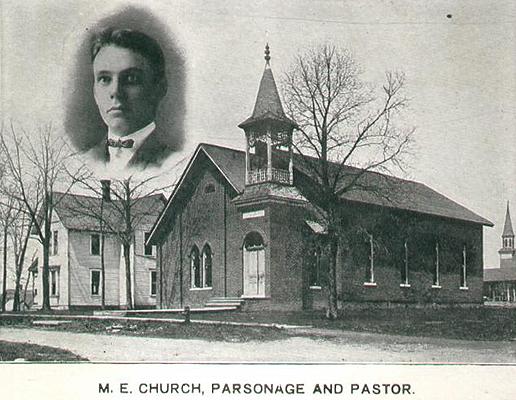
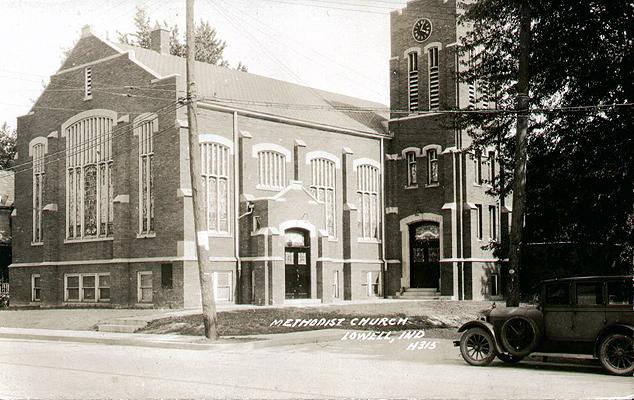
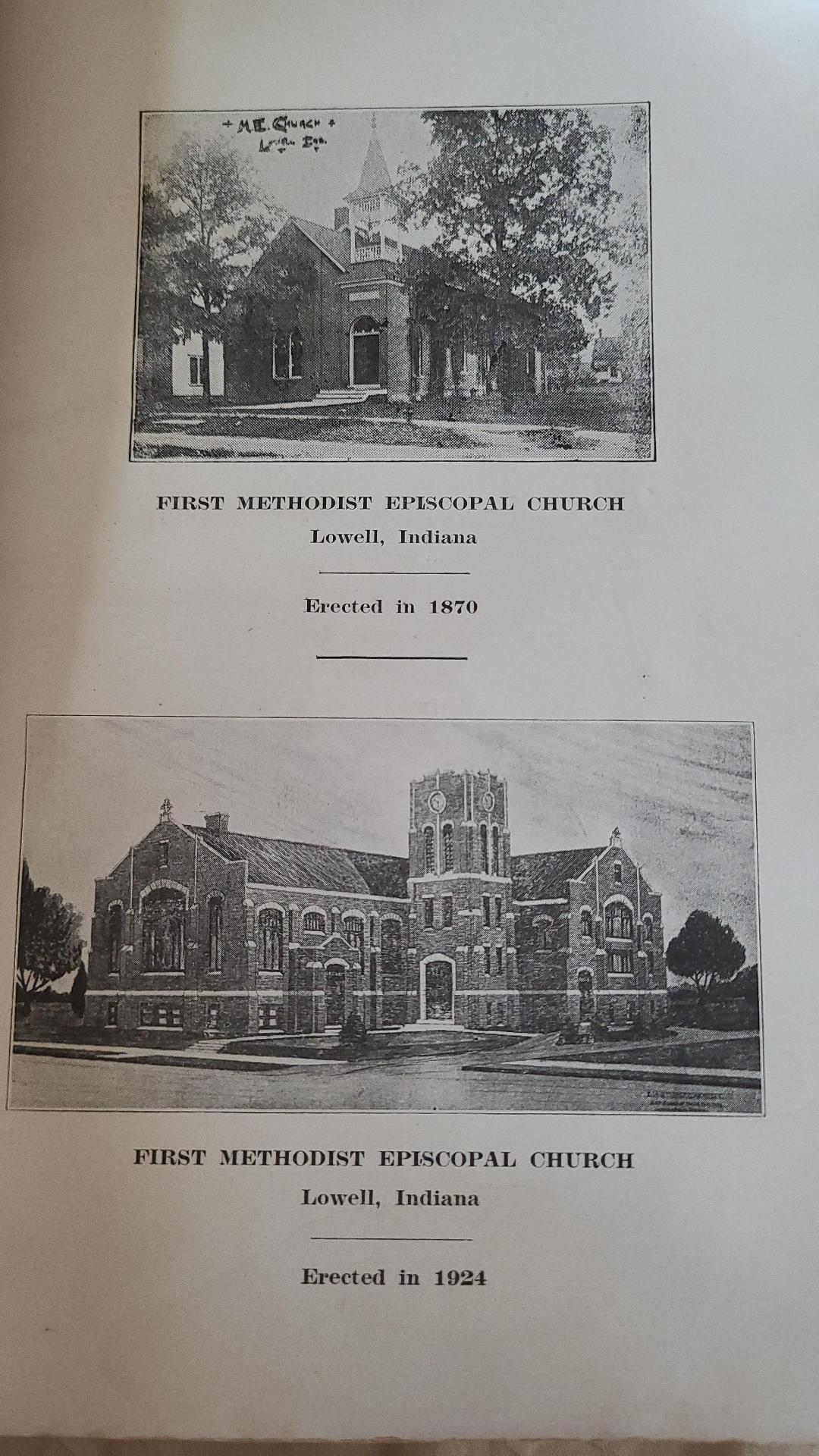
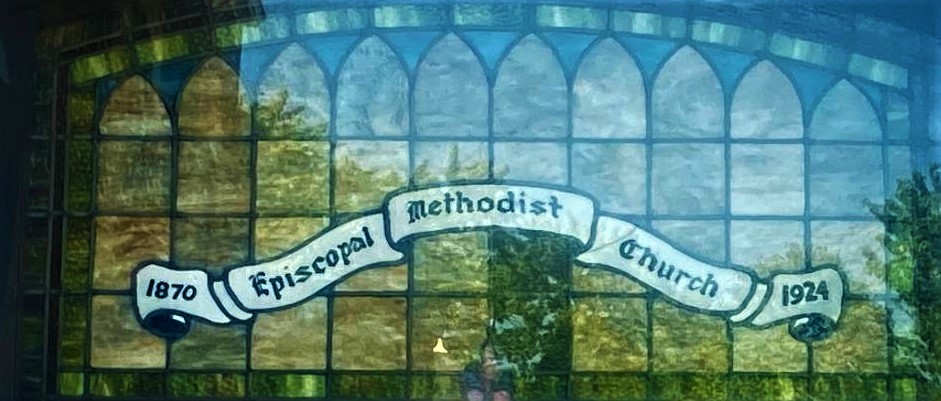
First services were held in the area that became Lowell. Rev. Coclazer, the circuit rider of the Deep River Mission stopped in the area and held a preaching service in the home of Wayne Bryant. The early settlers of the area were Robert Hyde, John Kitchel, Mrs. Henry Sanger, and Mrs. John Sanger. The meetings were held in the homes of these
pioneers.
Area came under the Kankakee Mission.
Area became a circuit. A circuit is different from a mission. In a mission the pastor is to establish new congregations in a large area. A circuit is a set of established congregations served by a common pastor. This area became part of the Valparaiso Circuit.
We became part of the Crown Point Circuit and a log church was built east of current Lowell.
Lowell was founded by Melvin Halsted. It was named Lowell because the milling industries in the area reminded Halsted of Lowell, Massachusetts. Lowell Methodist Episcopal Church started meeting in a little schoolhouse which was located where the current Lowell High School is located.
Lowell left Crown Point Circuit to form the Lowell Circuit. Lowell Circuit originally consisted of Lowell, Orchard Grove, West Creek, Jones Schoolhouse and Pleasant Grove. Rev. James Claypool was the first pastor of the Lowell Circuit.
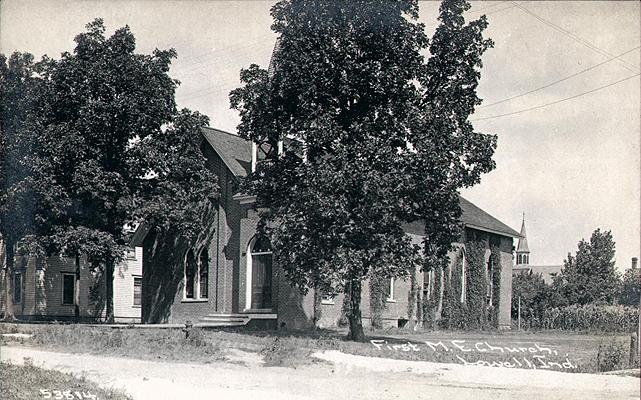
In September a new church building was Dedicated. It was built on the corner of Main and Burnham. The building was built at a cost of $4,000. Heat was provided by two stoves.
The Ladies Aid started and became a flourishing group in the church.
Rev. Joseph Sites was appointed to Lowell. A new parsonage was being acquired during this time but it was not ready for the Sites family to move into. The family stayed in a house where Lowell Health Care is now located. The Sites had two small children. In that house the youngest daughter was burned so badly that she ended up dying of her injuries.
The Women’s Foreign Missionary Society and the Young Woman’s Missionary Society were formed at Lowell.
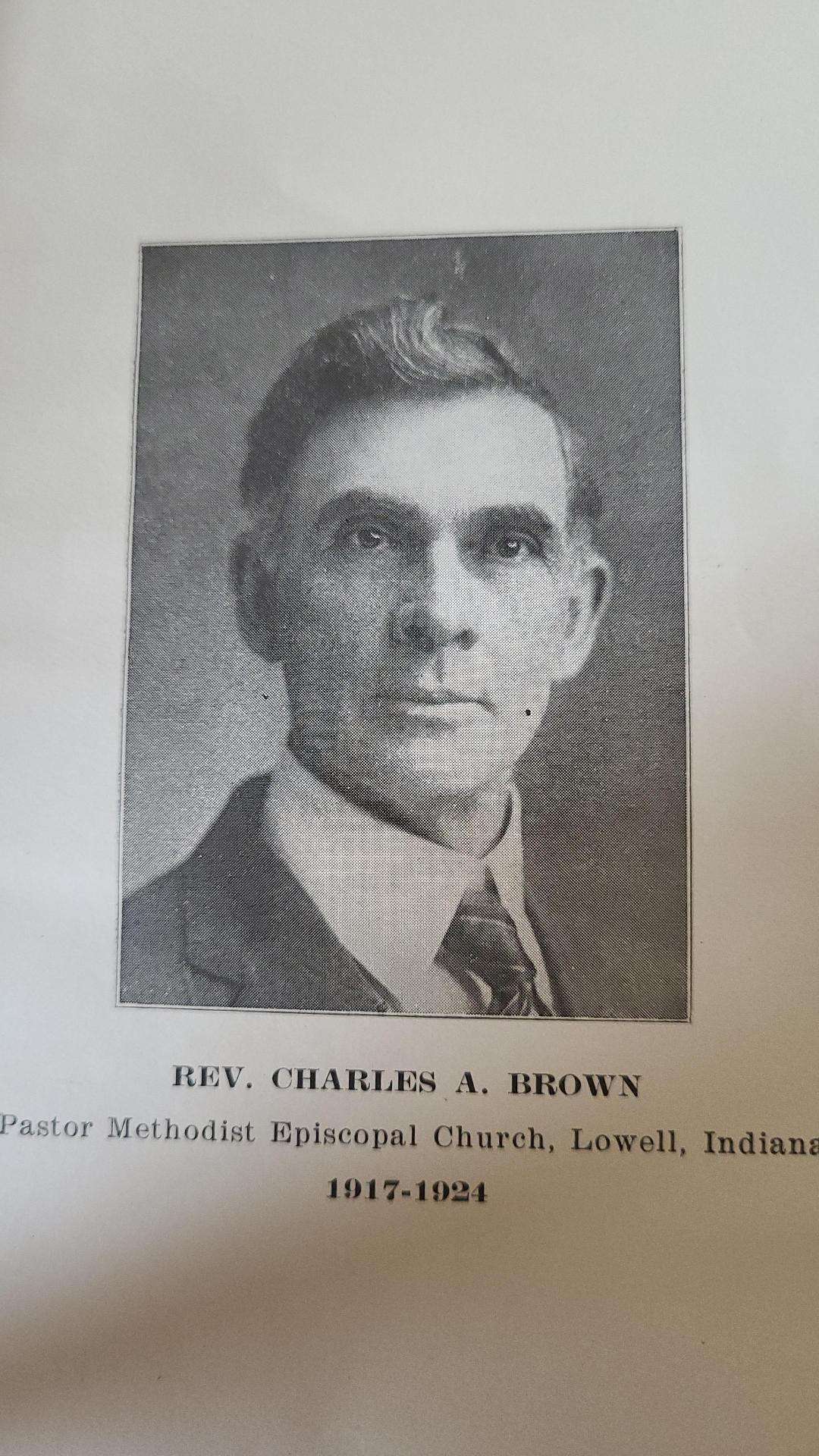
Rev. Charles Albert Brown was appointed to Lowell. He saw a need for a bigger building for the growing congregation. He began to present the need for a building after World War I ended.
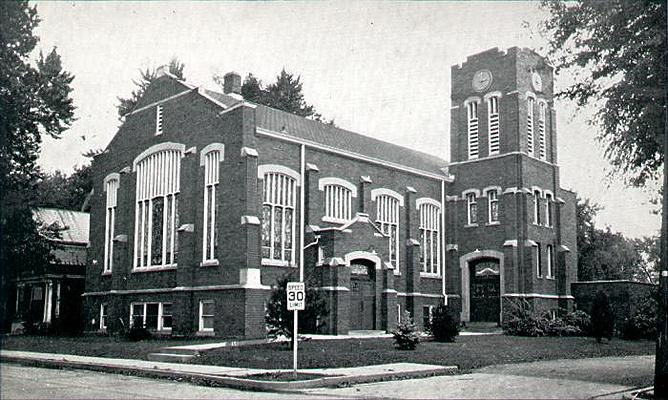
The lot was purchased for our present building and bids were received to build our church. The lowest bid was $60,000. The Trustees felt the bids were too expensive and so voted to reject them.
Revised plans were drawn up and the bid awarded to F.E. Muzzall and Sons of Crown Point. The cost was $38,000.
In April, work on the new building began. On May 24 the cornerstone was laid. The Masonic lodges of the area helped with the ceremonies of laying a cornerstone. Several articles were deposited in the copper box inside the stone. There was a Bible given by Mrs. Etta Harris; a hymn book by Mrs. R. J. Wells; a Methodist Discipline by Lester Brown; copies of the Lowell Tribune, the Western Christian Advocate, the North Western Christian Advocate. In addition to the above, a scroll on which the names of all who had paid on the building fund, up to Friday afternoon, May 23, 1924, were placed in the stone.
On January 11, a farewell service was held at the old building and on January 18, the new church was dedicated. Bishop Frederick Leete gave the message, “Things that last”. Within the new building, the Bible (that is currently on the altar) was given by Mr. and Mrs. Lester W Brown.
On April 1, Lowell voted to join the other Methodist Episcopal Churches of Lake County in supporting the anti-saloon league – the Volstead Act.
The various Methodist denominations merged and Lowell Methodist Episcopal Church became Lowell Methodist Church.
The three women’s groups became The Women’s Society of Christian Service and the Men’s group was formed.
Lowell stopped being a circuit and was established as a single charge.
In January, the “Bargain Korner” opened its doors. Run by the Women’s Society, it has been a profitable ministry providing low-cost clothing and goods to the community. Proceeds have over the years gone for church improvements and missions.
The church newsletter, “The Methodist Messenger” was started.
The building addition and remodel of the sanctuary were completed and the lighted cross at the front of the sanctuary was dedicated.
Rev. Ralph Maddison becomes the first associate pastor.
Land was purchased for the new parsonage. The site on Hill Top Drive was purchased by the Women’s Society.
The church name was changed from Lowell Methodist Church to Lowell United Methodist Church. The first pictorial directory was produced.
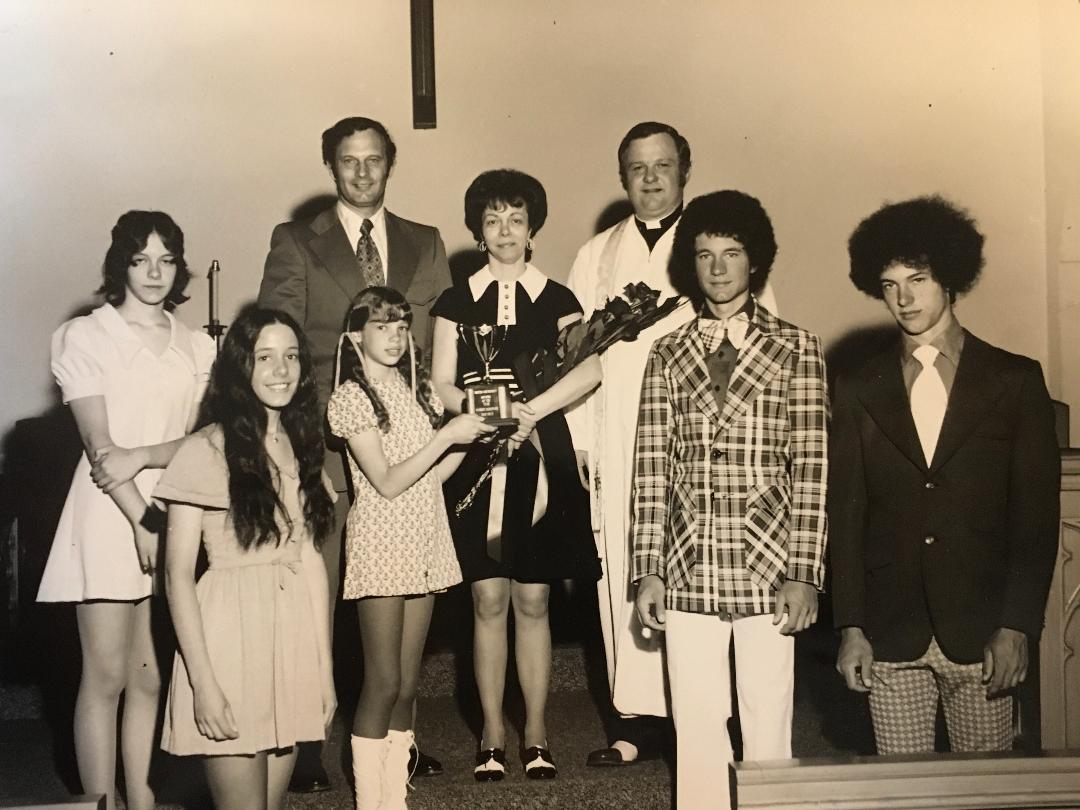
Jane Anderson was hired as an associate to work with youth. Throughout the 1970s the church chose a woman of the year.
First UMC celebrated its sesquicentennial. (150 years). Part of the celebration was the installation of a time capsule. It is to be opened at the bicentennial celebration in 2037.
Plans were drawn up for the new addition. Legal difficulties delay the process for two years.
Three floors of addition are completed. Adds the Sunday School rooms upstairs, offices, narthex on main floor and Sunday School rooms in the basement.
Praise Service started by Pastor Jeff Newton. Household Pantry started by Tami Boggs, Director of Outreach, and Pastor Jeff Newton.
Bill Dunfee was appointed as pastor. During his tenure, four members entered the ministry. Ed & Mary Van Wijk, Tami Boggs, and David Patterson.
During Rev. Rick Jones’ pastorate the Memorial Garden was installed.
The sanctuary was painted and plaster repaired, a metal roof installed and tuck pointing done.
For the first time in its history First Church had to cancel in person meetings because of the global covid-19 pandemic. Between March 15 off and on into 2021 in person services and meetings were suspended. Services were broadcast weekly online.
A children’s playground was installed on the south side of the church.